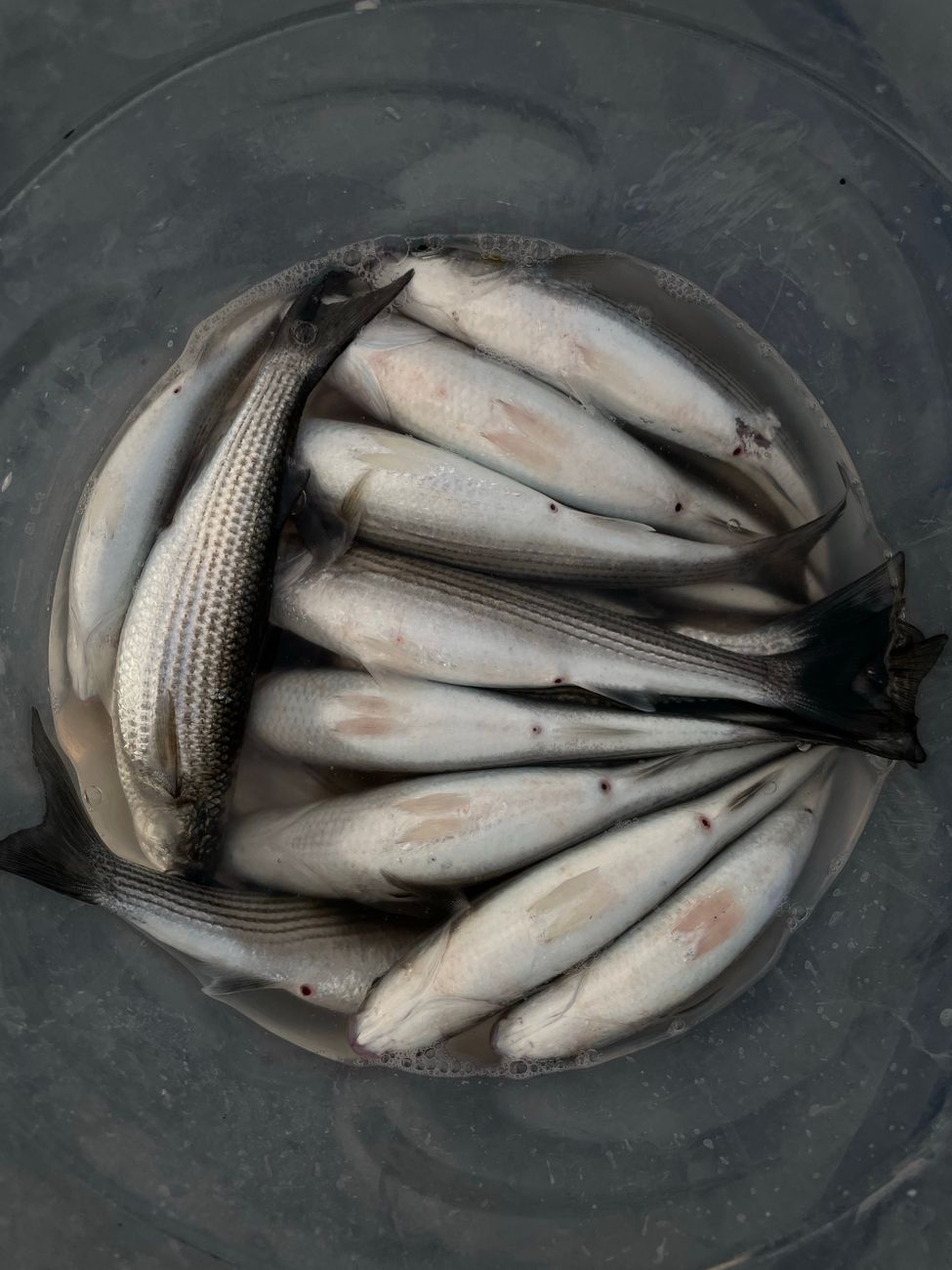
Every fall, South Florida experiences one of the most exciting fishing events of the year… the annual mullet run.
Millions of mullet migrate along Florida’s coastline, forming massive schools that can stretch for hundreds of yards. Following them are some of South Florida’s most popular gamefish, including snook, tarpon, jack crevalle, sharks, Spanish mackerel, and other predators.
At times, the action can be incredible. A seemingly calm school of mullet can suddenly explode as tarpon roll through the middle, snook attack from underneath, and jacks tear into the edges. Birds dive from above while sharks patrol behind the school.
But seeing thousands of mullet doesn’t necessarily mean catching fish is easy.
In fact, the abundance of natural bait during the mullet run can sometimes make fishing surprisingly difficult. Your lure or bait may be competing with thousands, or millions, of mullet.
This guide explains when the South Florida mullet run occurs, where to fish it, what species you can catch, the best lures and baits to use, and how to position yourself around a moving school of mullet.
What Is the Florida Mullet Run?

The mullet run is the annual migration of mullet southward along Florida’s Atlantic coast.
Mullet are extremely important fish in Florida, and food for many species of gamefish. Throughout the year, they can be found in canals, estuaries, bays, rivers, the Intracoastal Waterway, and along the coast.
As conditions begin changing toward the end of summer and into fall, large numbers of mullet begin moving south along the beaches as well as in the rivers and estuaries.
Instead of seeing scattered groups containing a few dozen fish, anglers can encounter enormous schools containing thousands of mullet. Sometimes the water looks black because of so many mullet schooled up.
For predatory fish, this represents a moving buffet.
Snook, tarpon, jack crevalle, sharks, Spanish mackerel, barracuda, and other predators take advantage of the concentration of bait.
For anglers, that creates one of the most visually exciting fishing opportunities of the year.
When Is the Mullet Run in South Florida?
For South Florida anglers, the mullet run generally becomes most important during September and October, although the exact timing varies from year to year.
You may begin noticing increased mullet activity toward the end of August, while good fishing can continue into November during some years. I have even seen it go into December.
There isn’t a specific date when someone can say, “The mullet run starts today.” You just need to go to the river or ocean to know.
Think of it more as a progression down Florida’s Atlantic coastline.
Weather, water temperature, wind, currents, and other environmental conditions can affect when schools appear and how quickly they move.
That means historical timing is useful, but current observations are even more valuable.
If anglers 30 or 40 miles north of you suddenly start reporting huge schools of mullet along the beach, it’s a good indication that the migration may soon reach your area. Definitely read the weekly fishing reports for all along the Florida coast to see where the mullet are.
Typical South Florida Mullet Run Timeline
| Period | What You May See |
|---|---|
| Late August | Early schools and increasing mullet activity. Smaller sized mullet starting to school |
| September | Mullet numbers typically increase substantially. Finger sized mullet during this time |
| Late September–October | Often some of the best South Florida action. Grab your cast net |
| Late October–November | Schools may still be present, but activity becomes less consistent |
These are general guidelines rather than guaranteed dates.
Where to Fish the Mullet Run in South Florida
One of the great things about the mullet run is that you don’t necessarily need a boat.
Some of the best action can occur surprisingly close to shore.
1. Beaches
South Florida’s Atlantic beaches are probably the most iconic place to experience the mullet run, and most fun to just watch.
Large schools frequently travel parallel to the shoreline.
Sometimes they’re hundreds of yards offshore. Other times they’re practically at your feet.
This creates excellent opportunities for surf fishermen because predators frequently follow the schools into relatively shallow water.
Look for:
- Dark patches moving through the water
- Mullet jumping
- Diving birds
- Exploding baitfish
- Tarpon rolling
- Sharks cruising the edges
- Large splashes within the school
Don’t automatically make the longest cast possible.
If the mullet are 20 yards off the beach, that’s where the predators are likely to be.
One thing that I found that helps is to add weight to your line and get the bait below the school. Try and separate your bait from the school, but still be close to the school as possible.
2. Inlets
South Florida’s inlets can become predator highways during the mullet run.
Mullet moving along the coastline eventually encounter these openings connecting the Atlantic Ocean with the Intracoastal Waterway.
Snook, tarpon, jacks, sharks, and other fish may congregate around these areas waiting for baitfish.
Moving water can make the situation even better because currents concentrate and disorient bait.
Areas around structures, current seams, jetties, bridge pilings, and drop-offs can all be productive.
However, inlet fishing requires extra caution. Strong currents, slippery rocks, boat traffic, waves, and casting around other anglers can create dangerous situations, so be careful when fishing this area.
If there happens to be a pier near the inlet, try fishing there.
3. Intracoastal Waterway
Don’t assume the entire mullet run happens along the beach.
Schools also move through South Florida’s Intracoastal Waterway and connected waterways.
Bridges can be particularly interesting locations.
Lights, pilings, shadow lines, current, and structure already attract fish. Add hundreds of mullet moving through the area and predators have another reason to stay nearby.
This can make bridges especially productive around dawn, dusk, and nighttime.
4. Spillways and Canals
South Florida’s extensive canal system can also hold large numbers of mullet.
Spillways are particularly exciting because flowing water can concentrate baitfish while creating feeding opportunities for predators.
Snook and tarpon may position themselves where they can intercept bait being pushed through or across moving water.
Even if you don’t see an enormous migrating school, increased mullet activity can improve fishing throughout the surrounding system.
Follow the bait, and there will be predators, even if there’s not a crazy amount of bait there.
What Can You Catch During the South Florida Mullet Run?
One of the biggest attractions of the mullet run is that you never know exactly what’s attacking the school.

Snook
For many South Florida anglers, snook are one of the primary targets of the mullet run.
Mature snook are capable of eating surprisingly large prey, making mullet an excellent natural bait.
Look for snook around:
- Inlets
- Bridges
- Seawalls
- Jetties
- Beach troughs
- Canal mouths
- Current breaks
Rather than casting randomly into a giant school, concentrate on the edges and underneath the school, where predators can isolate individual baitfish.
Tarpon
Few things are more spectacular than watching a large tarpon attack a school of mullet.
A tarpon can erupt through the school, sending mullet flying in every direction. They also jump in the middle of schools which is very fun to see.
Large live mullet are excellent tarpon bait during this period, while large swimbaits, plugs, and other mullet-shaped artificial lures can also produce strikes.
If tarpon are actively feeding, try predicting where the school is moving and place your presentation ahead of the fish rather than constantly chasing individual explosions.
Jack Crevalle
If your goal is simply to have something nearly rip the rod out of your hands, jack crevalle are hard to beat.
Schools of jacks can absolutely demolish mullet.
They often aren’t subtle about it either.
Look for large areas of disturbed water and bait spraying across the surface.
Fast-moving plugs, spoons, swimbaits, and live mullet can all work.
And make sure your drag is set properly before casting. A big jack can quickly expose weak knots, old line, or undersized tackle.
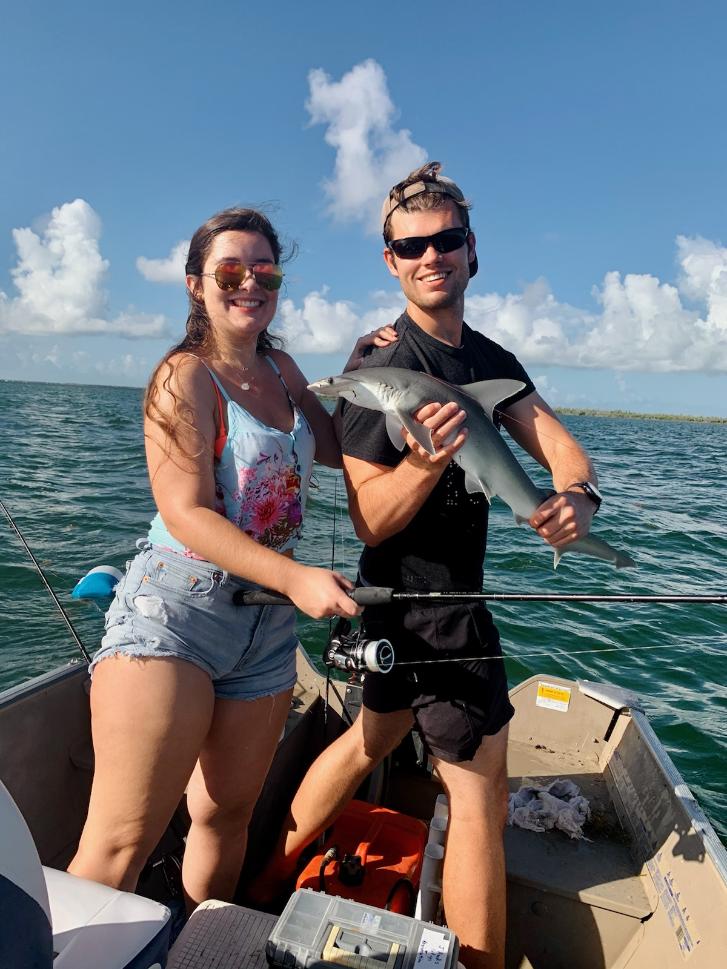
Sharks
Where there are huge concentrations of prey, sharks are rarely far away.
Several shark species may follow mullet schools along South Florida’s coastline.
It’s not unusual to see sharks cruising directly behind or underneath schools, particularly when viewed from an elevated position.
Anglers specifically targeting sharks should make sure they understand Florida’s current shark fishing regulations, prohibited species, handling requirements, and shore-based shark fishing rules before fishing.
Spanish Mackerel
Spanish mackerel are another predator anglers may encounter around migrating bait.
Their speed makes them perfectly suited for attacking small baitfish.
Fast-moving spoons and flashy lures can be particularly effective when mackerel are feeding.
Try smaller lures for them.
Their sharp teeth can also cut through light leader surprisingly quickly.
Other Predators
Depending on where you’re fishing, you might also encounter:
- Bluefish
- Barracuda
- Ladyfish
- Mangrove snapper
- Redfish
- Various sharks
- Other coastal predators
That’s part of what makes the mullet run so much fun.
You may cast into a school expecting a jack and suddenly find yourself connected to a tarpon.
Best Live Bait for the Mullet Run
Sometimes the best bait for fishing around mullet is exactly what everything is already eating.
A live mullet.
The biggest challenge is making your mullet stand out among thousands of identical meals.
Match the Size of the Mullet
Pay attention to the bait you’re seeing.
Not every mullet school contains the same size fish.
If predators are attacking 4″ finger mullet, throwing a huge bait may not always be the best strategy.
Conversely, when large predators are feeding on bigger mullet, don’t be afraid to increase bait size.
Matching the dominant forage gives predators something they’re already accustomed to eating.
Fish the Outside of the School

Imagine being offered one french fry versus being asked to select one specific fry from a pile of 10,000.
Predators face a similar problem.
A mullet isolated from the school is easier to identify and attack.
Try presenting your bait behind the school, in front of it, underneath it, or along either side.
Those areas can be more productive than dropping your bait directly into the densest part of the school.
Best Artificial Lures for the Mullet Run
Artificial lures have one major advantage during the mullet run: you can cover water quickly.
That’s important because the schools themselves are constantly moving.
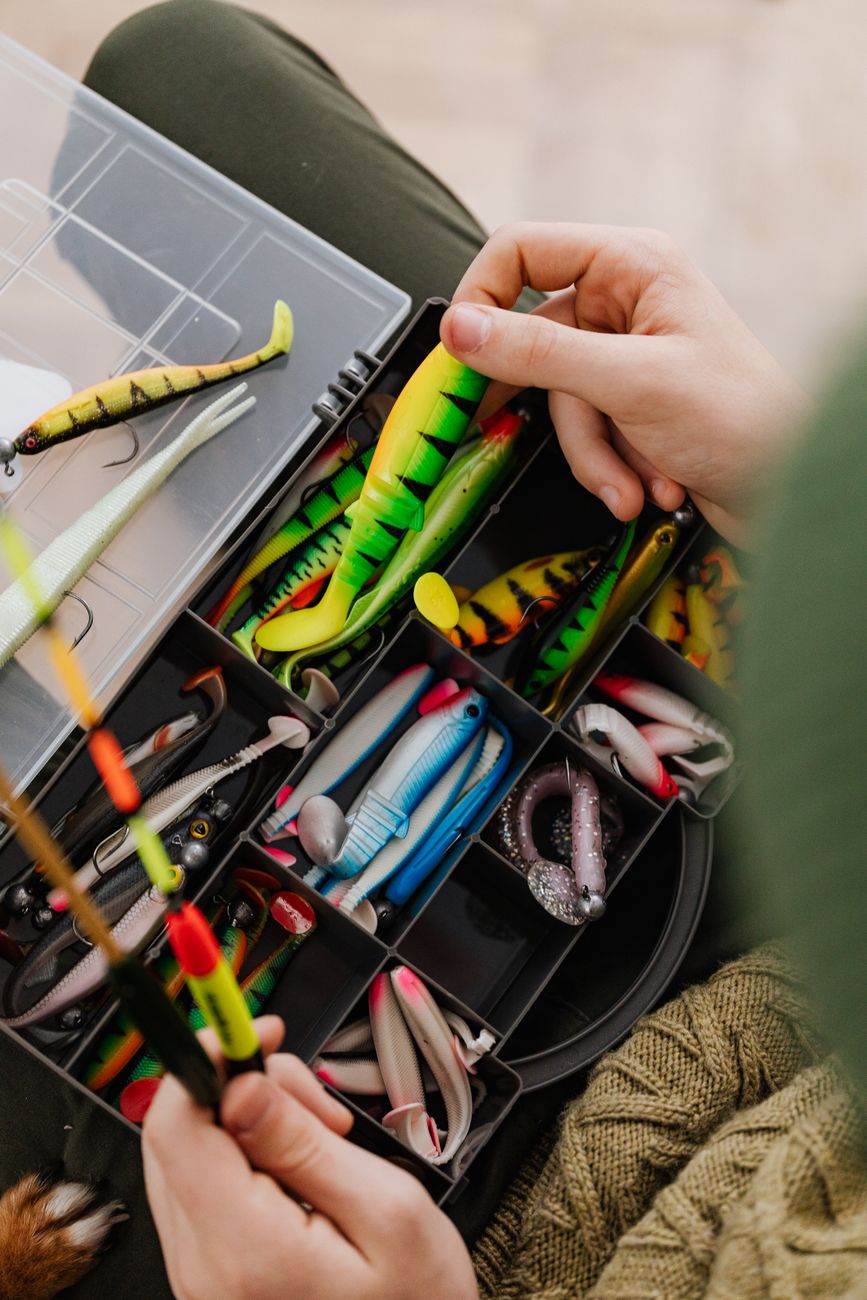
Mullet Style Swimbaits
Paddle tail swimbaits are among the most versatile choices.
They imitate the profile and swimming action of baitfish and can be worked at different depths.
Try retrieving them alongside the school rather than simply through its center.
Topwater Plugs
Early morning plus mullet run plus topwater fishing can produce some spectacular strikes.
Walk-the-dog style plugs can imitate a wounded or separated baitfish. My favorite lure is a Zara Spook.
However, when the surface is already chaotic, a lure slightly underneath the school may sometimes stand out better.
Diving Plugs
Diving plugs allow you to target predators holding below the mullet.
This can be especially useful when you can see bait everywhere but aren’t seeing predators breaking the surface.
Spoons
Spoons are excellent search baits because they cast far and can be retrieved quickly.
That makes them particularly useful from beaches where the school may suddenly move another 50 yards down the shoreline.
The Biggest Mullet Run Fishing Mistake
One of the easiest mistakes is assuming:
More bait = easier fishing.
Sometimes the opposite happens.
Imagine casting one artificial lure into a school containing several thousand real mullet.
Why should a predator choose yours?
This is where presentation becomes extremely important.
Instead of simply matching the hatch, you sometimes want to match the hatch while looking vulnerable.
Try making your lure appear like a mullet that has become separated from the school (fish a little outside or under the school).
A pause, sudden change in direction or faster burst can make your lure different enough to attract attention.
Don’t Chase Every Explosion

A tarpon explodes 50 yards to your right.
Everyone runs right.
Thirty seconds later, something blows up 40 yards to the left.
Everyone runs left.
Meanwhile, the school continues moving.
Instead of chasing individual strikes, watch the direction of the entire bait school.
Predators are frequently moving with it.
Try positioning yourself where you think the bait will be in a few minutes.
You’re trying to intercept the migration rather than chase it.
Look for Nervous Water
You don’t always need to see fish exploding on the surface.
Learn to recognize the appearance of a nervous bait school.
Calm mullet generally move in a relatively organized manner.
Mullet being hunted behave differently.
Look for:
- Sudden changes in direction
- Tightening schools
- Repeated jumping
- Bait spraying from the water
- Sections of the school separating
- Large boils underneath the bait
- Birds suddenly concentrating on one location
Sometimes you can tell a predator is underneath the school before you ever actually see it.
Use Birds to Find Feeding Fish

Birds can provide one of the easiest ways to locate active sections of the mullet run.
A huge school of mullet may be visible from the beach, but that doesn’t mean predators are feeding throughout the entire school.
Pay attention to where birds are concentrating.
If several birds repeatedly dive into the same small section of a school, something may be pushing bait toward the surface.
Don’t just watch the birds themselves. Watch the water underneath them.
That is often where the real action is happening.
Best Time of Day to Fish the Mullet Run
Early morning is one of the best times to be on the water.
Low-light conditions can encourage predators to move into shallow water and aggressively attack bait.
Sunrise can therefore produce spectacular fishing along beaches, inlets, bridges, and other areas holding mullet.
Evening can provide another productive window.
However, don’t assume the fishing shuts down during the middle of the day.
If you find a large school actively being attacked, fish it regardless of the time.
During the mullet run, finding active bait can be more important than following a specific clock.
What Tackle Should You Use?
There’s no perfect mullet-run setup because the fish feeding on the schools vary tremendously in size.
One cast could produce a small Spanish mackerel. The next could connect you with a large jack, snook, tarpon, or shark.
For general-purpose fishing, a medium-heavy spinning setup provides a useful compromise between casting distance and power.
Braided line can help increase casting distance and line capacity, while a fluorocarbon or monofilament leader provides abrasion resistance.
Leader strength should depend heavily on the species you’re targeting and the structure around you.
If large tarpon, snook, or jacks are present, going too light can result in unnecessary breakoffs.
At the same time, extremely heavy tackle can make smaller lures difficult to cast.
Match your setup to the fish you’re actually seeing.
How to Find the Mullet Run
The frustrating part about the mullet run is that yesterday’s incredible fishing spot can look completely empty today.
The bait is migrating.
You need to move with it.
Before fishing, check recent reports and pay attention to where large schools have been observed.
Once you’re at the beach, an elevated vantage point can make spotting schools much easier. Try finding jetties that you can walk on to give you a better vantage point.
Look for large dark masses moving parallel to shore.
Polarized sunglasses are extremely helpful.
If you’re not seeing bait, don’t be afraid to move.
Driving several miles and checking another beach access can be far more productive than spending three hours casting into empty water.
A Simple Mullet Run Strategy
If I were heading to the beach specifically to fish the South Florida mullet run, my basic strategy would be simple.
Arrive around sunrise and start by finding the bait before worrying about fishing.
Once I locate a school, I’d spend a few minutes watching it.
- Which direction is it moving?
- Are birds diving?
- Are mullet jumping naturally, or are entire sections suddenly exploding?
- Can I see tarpon rolling?
- Are predators attacking the front, back, or outside edge?
Then I’d position myself slightly ahead of the moving school and cast along its edges.
If nothing happens, I’d change depth before constantly changing lures.
Predators may simply be sitting underneath the mullet.
And if the entire school moves down the beach, I’d move with it.
During the mullet run, mobility can be one of your biggest advantages.
Mullet Run Fishing Safety
The excitement can make anglers forget that surf and inlet fishing come with real hazards.
Watch for waves, strong currents, slippery rocks, hooks flying around crowded beaches, and changing weather.
Never put yourself in a dangerous position just because fish are feeding farther down a jetty or beyond a breaking wave.
Also remember that South Florida beaches can become crowded. A school of mullet may attract anglers, swimmers, surfers, birds, sharks, and large predatory fish to the same relatively small area.
Give other people room.
Check Florida Fishing Regulations Before You Go
Fishing regulations can change, and different species have different seasons, size limits, bag limits, gear restrictions, and handling requirements.
This is particularly important during the mullet run because you may encounter numerous species during the same fishing trip.
A lure intended for jacks could hook a snook. A live mullet intended for tarpon could get eaten by a shark.
Check the current Florida Fish and Wildlife Conservation Commission regulations before heading out, especially if you plan to keep fish.
Final Thoughts: Why the South Florida Mullet Run Is Worth Fishing
The mullet run isn’t just about catching fish.
It’s one of the few times when you can stand on a South Florida beach and actually watch the marine food chain unfolding in front of you.
Thousands of mullet stream down the coastline.
Birds attack from above.
Snook and jacks attack from below.
Tarpon crash through the schools.
Sharks follow behind.
And you’re standing on the beach with a fishing rod in your hand.
Some days you’ll find acres of bait and struggle to get a bite. Other days, you’ll make a cast into what looks like boiling water and hook something almost immediately.
That’s the unpredictability that makes the mullet run so much fun.
The key is to find the bait, watch how it’s behaving, target the edges, and stay mobile.
When everything lines up, the South Florida mullet run can produce some of the most exciting fishing you’ll experience all year.


Leave a Reply