
One of the best things about fishing in South Florida is that you really have no idea what you might catch.
You could hook a snook along a seawall, a tarpon underneath a bridge, a mangrove snapper around some rocks, or a jack that decides to take 100 yards of line for absolutely no reason. Or…you hook a catfish :/
But before you can catch any of those fish, you have to answer one of the most basic fishing questions:
What bait should I use?
Unfortunately, there isn’t one perfect answer, unless you are targetting catfish….then literally anything is bait 🙁
No hatred for catfish, but I would like to not catch them all the time.
South Florida has an incredible variety of bait, and what fish are eating changes throughout the year. Water temperature, tides, rainfall, spawning behavior, and seasonal migrations can all affect what prey is available.
The good news is that you don’t need 15 different types of bait every time you go fishing.
A handful of baits will catch the vast majority of South Florida gamefish. Honestly, even just one bait might be best, depending on the time of year.
So, let’s talk about the best baits to use in South Florida, when to use them, and what you can expect to catch.
1. Live Shrimp
If I had to recommend one bait to someone who had never fished South Florida before, I would probably tell them to buy live shrimp.
Why?
Because almost everything eats shrimp.

- Snook eat them.
- Mangrove snapper eat them.
- Sheepshead eat them.
- Redfish eat them.
- Bonefish eat them.
- Permit eat them.
- Jacks eat them.
- Even tarpon eat them, especially in February when the shrimp run occurs
There aren’t many baits that can realistically produce that many different species.
Shrimp are particularly useful when you don’t know exactly what you’re fishing for. If you’re fishing around docks, seawalls, bridges, mangroves, or other inshore structure, putting a live shrimp in the water gives you a pretty good chance of getting something to bite.
They are also incredibly easy to use.
You can free line them, put them underneath a popping cork, fish them on a jighead, or put a small weight above the hook and fish them near the bottom.
One important consideration is bait size.
A giant shrimp might look appealing to us, but sometimes smaller shrimp actually work better, particularly when fish are feeding on smaller prey.
During cooler months, live shrimp become especially useful because shrimp are naturally abundant prey and many fish remain willing to eat them even when they become less aggressive.
Best for:
Snook, mangrove snapper, sheepshead, redfish, bonefish, permit, jacks and juvenile tarpon.
Best time:
Year round, but particularly useful during winter and cooler conditions.
2. Pilchards
If live shrimp are the universal South Florida bait, pilchards might be the universal South Florida baitfish.
Depending on where you fish, you’ll hear people call them pilchards, whitebait, or scaled sardines.
Whatever you call them, fish love them.
Pilchards are one of my favorite choices when targeting predators such as snook, tarpon, jacks and snapper.
And there is a pretty simple reason they work.
They are naturally part of the food web.
Predatory fish spend their lives looking for schools of small baitfish. When pilchards are abundant, predators often concentrate around them.
If you see a school of bait getting nervous near the surface, birds diving into the water, or baitfish suddenly exploding in every direction, there is a pretty good chance something underneath them is trying to eat them.
That is exactly when throwing out a live pilchard can be extremely effective.
Pilchards can be free lined around structure, drifted with the current, or fished underneath a float.
They can also be used as cut bait if they die.
That’s another nice thing about baitfish.
Your bait dying doesn’t necessarily mean your fishing trip is over.
I’ve caught some massive mangrove snappers and gag groupers off cut pilchards
Best for:
Snook, tarpon, mangrove snapper, jacks, barracuda, grouper and other predatory species.
Best time:
Spring through fall, although availability varies.
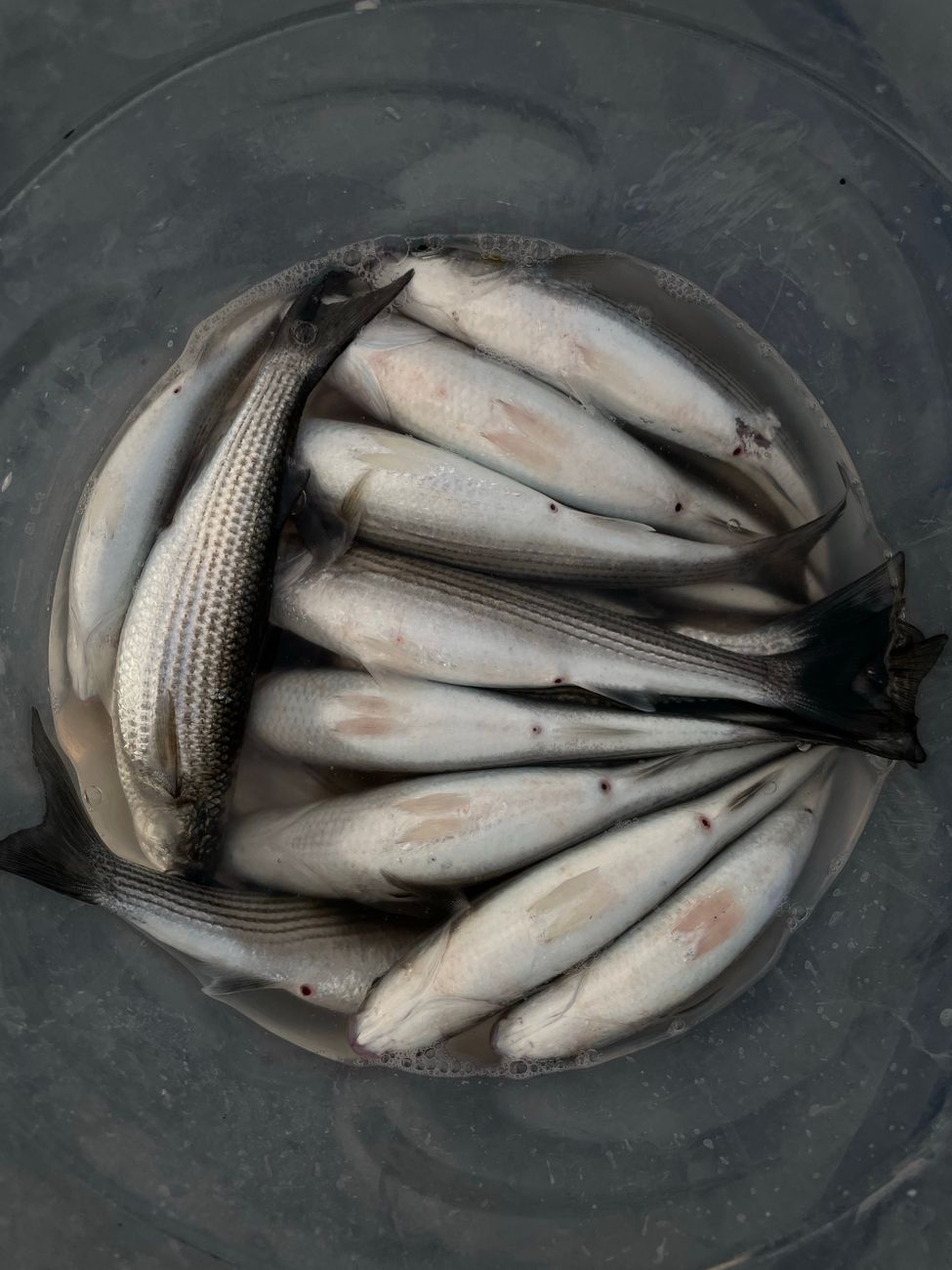
3. Finger Mullet

Then we have one of the most iconic baitfish in Florida.
The mullet.
Mullet are interesting because they aren’t just another baitfish. Their seasonal movements can completely change fishing along Florida’s coast.
Every fall, huge numbers of mullet migrate along Florida’s coastline during what fishermen simply call the mullet run.
And predators notice.
Snook, tarpon, sharks, jacks and other large predators gather around these schools because suddenly there is an enormous amount of food moving through the system.
It can produce some absolutely ridiculous fishing.
For most inshore fishing, finger mullet are particularly useful.
These are smaller mullet that are large enough to attract substantial predators without being so large that they become difficult to fish.
A live finger mullet swimming around naturally sends out vibrations and visual cues that predators can detect.
You can free line them around bridges, seawalls, beaches and inlets or use additional weight when you need to keep the bait in a particular area.
During the fall mullet run, matching the bait that predators are already eating can be extremely effective.
If thousands of mullet are swimming down the beach and everything around you is eating mullet, this probably isn’t the time to get creative.
Give the fish a mullet.
Best for:
Snook, tarpon, jacks, sharks, barracuda and other large predators.
Best time:
Late summer and fall, particularly during the mullet run.
4. Pinfish

Pinfish aren’t glamorous.
Nobody comes back from the bait shop excited because they bought the most beautiful pinfish they have ever seen.
But predatory fish don’t care.
Pinfish are incredibly useful live baits throughout South Florida.
They are hardy, readily available, and naturally occur in many of the environments where you’re fishing.
They can also survive on a hook for a relatively long time compared with some more baitfish.
That makes them especially useful when targeting larger fish.
A lively pinfish struggling near structure can attract snook, snapper, grouper and other predators. I’ve also hooked massive sharks and tarpon on pinfish.
You can also adjust the size of your pinfish depending on what you’re targeting.
Smaller pinfish can work well for snapper and smaller inshore predators, while larger pinfish can be used when you’re specifically looking for larger snook, grouper, tarpon or other big fish.
Best for:
Snook, grouper, snapper, tarpon and other predatory fish.
Best time:
Year round.
5. Crabs
Sometimes baitfish aren’t the answer at all.
Sometimes you need a crab.
Crabs become particularly important when you’re targeting species such as permit and tarpon.
A small live crab drifting naturally through the water can be incredibly effective because it closely resembles something those fish are already searching for.
Permit in particular have a reputation for being difficult.
You can see them.
You can cast at them.
You can put what appears to be the perfect bait directly in front of them.
And they can still completely ignore you.
That is fishing.
But presenting a natural crab can dramatically improve your odds.
The only permit I ever caught was off a crab and he inhaled that thing in the blink of an eye. They love crabs.
Crabs can also become especially important during seasonal crab movements and spawning events, when predators begin actively looking for them.
The important idea here is something that applies to nearly every bait on this list:
Match what the fish are currently eating.
If the ecosystem is suddenly full of crabs, use a crab.
If it is full of mullet, use mullet.
If predators are smashing pilchards, use pilchards.
Sometimes fishing really is that simple.
Best for:
Permit and tarpon, along with several other opportunistic species.
Best time:
Year round when available, with particularly good opportunities during seasonal crab movements.
6. Ballyhoo

If you move offshore, the bait situation starts to change.
Ballyhoo are one of the classic South Florida offshore baits.
They can be used dead, rigged, or sometimes live depending on the fishing method.
They are particularly popular for trolling because their long, slender bodies produce a natural presentation when properly rigged.
Species such as mahi mahi (or dolphin if you are a Floridian), sailfish, wahoo and tuna may all respond to ballyhoo presentations.
This is also a good example of why “the best bait in South Florida” depends heavily on where you’re fishing.
If you’re standing next to a mangrove shoreline trying to catch a snapper, bringing a cooler full of rigged ballyhoo probably doesn’t make much sense.
If you’re offshore trolling for mahi?
Now we’re talking.
Also, I’ve been meaning to get around to an offshore fishing blog post. Maybe soon!!!!
Best for:
Mahi mahi, sailfish, wahoo, tuna and other offshore predators.
Best time:
Year round depending on the target species and offshore conditions.
7. Squid

Squid isn’t as exciting as throwing a giant live bait to a snook, but it deserves a place on this list for one major reason:
It stays on the hook.
Sometimes that’s exactly what you need.
Squid can be extremely useful for bottom fishing because its tougher flesh can survive attacks from smaller fish better than softer baits.
Pieces or strips of squid can catch snapper, grunts, porgies and a variety of reef and bottom species.
It is also easy to store.
You don’t need an aerator.
You don’t need a livewell.
You don’t need to throw a cast net for an hour before fishing.
You can keep frozen squid available and have bait whenever you need it.
Is it always the absolute best bait?
Probably not.
But convenience matters.
Best for:
Snapper, grunts, porgies and general reef or bottom fishing.
Best time:
Year round.
8. Cut Bait
Never underestimate a chunk of dead fish.
Cut bait works because predators and scavengers use smell to locate food.
A piece of mullet, menhaden, bonita or another oily fish releases scent into the surrounding water and creates a trail that fish can follow.
This can be especially useful when targeting sharks, snapper, grouper, jacks and other opportunistic predators.
Cut bait also solves one of the most annoying problems in live bait fishing.
Your bait died.
Instead of throwing it away, cut it up.
Congratulations.
You have a different type of bait now.
One thing to consider is bait freshness. Fresh cut bait will generally have better texture and natural scent than something that has been sitting around forever.
Best for:
Sharks, snapper, grouper, jacks and many bottom feeding or scavenging species.
Best time:
Year round.
The Best Bait for Each Season in South Florida
Now we get to the important part.
South Florida doesn’t experience seasons in the same way that much of the country does.
We’re not exactly drilling holes through ice in January (thank God).
But water temperature, rainfall, bait migrations and fish behavior still change throughout the year.
That means your bait strategy should change too.
Winter: Live Shrimp
If I had to pick one bait for South Florida during winter, I would choose live shrimp.
Cooler water can change fish behavior, and some species become less aggressive than they are during warmer months.
A naturally presented shrimp is difficult to beat.
Shrimp also gives you an enormous range of possible catches.
You might catch snapper around structure, sheepshead near pilings, snook in deeper water, or a variety of other inshore species.
If you’re fishing South Florida during a cold front and have no idea what to use, start with shrimp.
Spring: Pilchards
Spring is when things start waking up.
Water temperatures increase, baitfish become increasingly active, and predators begin feeding more aggressively.
This is when pilchards really start becoming useful.
A live pilchard presented around structure or moving water can attract snook, tarpon, jacks and snapper.
Spring is also a great time to pay attention to what is actually in the water.
If baitfish are everywhere, use baitfish.
Summer: Pilchards and Pinfish
Summer gives you a lot of options.
South Florida waters are warm, bait is abundant, and many predatory species are extremely active.
Pilchards remain one of the best overall choices.
Pinfish are another excellent option, especially when you want a hardy bait that can survive longer on the hook.
Summer is also when matching bait size can become important.
If predators are feeding on tiny baitfish, throwing something enormous might not produce the response you expect.
Watch the water.
The fish will often tell you what they’re eating.
Fall: Finger Mullet
Fall is mullet time. Go read about the mullet run (here).
The mullet run is one of the most exciting fishing events of the year in South Florida.
Large schools of mullet move along the coastline, and predators follow.
Snook, tarpon, jacks, sharks and other fish may position themselves around these schools waiting for an opportunity to attack.
During this period, finger mullet can be an outstanding bait.
You’re essentially giving predators exactly what they’re already hunting.
So What Is the Best Overall Bait in South Florida?

If you forced me to pick one, I would choose:
Live shrimp.
Not because shrimp will always outperform everything else.
They won’t.
A live mullet may be far better when giant snook are attacking mullet along the beach. Pilchards may outperform shrimp when predators are keyed in on schools of whitebait.
But shrimp wins because of versatility.
You can use shrimp in January.
You can use shrimp in July.
You can fish them around mangroves, docks, bridges, seawalls, flats and inlets.
And the number of species willing to eat a shrimp is ridiculous.
If you’re visiting South Florida, have no idea what is biting, and just want to catch fish, a bucket of live shrimp is a very good place to start.
Match the Hatch
There is one final concept that might be more important than this entire list.
Pay attention to what is already in the water.
Fishermen call this “matching the hatch.”
The phrase is commonly associated with fly fishing, but the basic idea applies everywhere.
Predators respond to prey availability.
If the water is filled with two inch baitfish, fish may focus heavily on small baitfish.
If mullet are migrating down the coastline, predators may focus on mullet.
If crabs are moving through an inlet, permit and tarpon may start looking for crabs.
The “best bait” can therefore change very quickly.
Instead of arriving at the water with a predetermined idea of what the fish should eat, spend a few minutes observing.
- Are birds diving?
- Do you see baitfish?
- Are mullet jumping?
- Are tiny fish getting pushed against a seawall?
- Is something exploding on the surface?
Those clues tell you what’s happening underneath the water.
And they might tell you what bait to use.
Final Thoughts
South Florida might be one of the easiest places in the country to become completely overwhelmed by bait choices.
Walk into a bait shop and suddenly you’re looking at shrimp, pilchards, pinfish, mullet, crabs, squid, ballyhoo and frozen bait while wondering why you didn’t just stay home.
It doesn’t need to be that complicated.
If you’re fishing inshore and don’t know what to use, start with live shrimp.
If predators are feeding heavily on baitfish, try pilchards.
If you want a hardy live bait for larger predators, try a pinfish.
When fall arrives and the mullet start moving, throw a finger mullet.
If you’re targeting permit, consider crabs.
If you’re heading offshore, ballyhoo becomes much more important.
And if you’re bottom fishing, sometimes a simple piece of squid or cut bait is all you need.
More importantly, look at what’s happening around you.
The best bait isn’t necessarily the bait somebody on the internet told you to use.
It’s often the bait that looks most like what the fish are already eating.
And in South Florida, there is almost always something eating something else.



Leave a Reply