
A Data Driven Guide to Making Better Decisions on the Water
Every angler eventually faces the same question. You put the boat in position, you cast a few times, you wait, and nothing happens. When to leave a fishing spot? It is one of the most interesting problems in fishing because it has no single correct answer. Yet there are patterns you can use, both from on the water experience and simple data principles, to make that decision easier.
The Psychology Behind Staying Too Long
Most anglers stay in a spot for one main reason. They want it to work or it just looks too good not to work. You studied the tides, moon phase, bottom structure, weather patterns, and everything else. You even created a whole Excel spreadsheet on all of the parameters that help with fishing. When you arrive at a location that looks perfect, you naturally expect fish to be there. This creates a mental bias known as the “sunk time” effect. The more time you invest in a spot, the more you want to keep investing.
Instead of relying on hope, use a simple approach. Collect small amounts of information quickly and let that guide your decision.
How Long Should You Give a Spot
You can answer this with a mix of fishing logic and probability.
1. You Know the Spot Produces Consistently
Example: A jetty that always holds snook and redfish or a deep drop that regularly produces mahi and sailfish.
In these cases you can give the spot more time because history tells you the fish should be there. Patience pays off here. Give it twenty to thirty minutes, work the entire area, change angles, and vary your retrieve. It is similar to knowing a data point is reliable. You do not discard it immediately.
Additionally, try the lures or baits that you know have worked in the past. Or, if you look at your spreadsheet that you created, you can determine what bait or lures SHOULD work. Try those.
2. You Are Exploring a New Area
This should be treated like collecting a sample in science. You do short tests, gather quick feedback, and move on if the data suggests the area is low probability.
Give a new spot 20 to 25 minutes max. Try various lures if you want. A big indicator though, is if you see any life, such as baitfish. If you do not see signs of life, do not let hope trap you. Move.
3. The Fish Are Known to Be Mobile
Species like mahi, tunas, Spanish mackerel, and jacks travel fast. If they are not there at that moment, they may appear later or not at all. It makes more sense to move and cover water than wait in one place.
Trolling is a great way to cover a lot of ground, very quickly. Sometimes these fish are not in the area until the sun comes up a bit or they are waiting until the temperature rises to come up to the surface.
Sometimes, you just need to be in an area where these fish attack bait and focus on when the bait arrives.
4. Species That Stay Put
Snapper, grouper, largemouth bass, and redfish often hold to structure. If you believe the fish are there but hesitant to feed, you can justify staying longer while making adjustments.

For saltwater, this might be a good time to get some chum, and chum the heck out of the area. This may cause a feeding frenzy that can last a very long time. Once the feeding frenzy is over, then you know it is time to leave.
What Data You Should Look For Before Staying
Think of the water as a living dataset. Every cast gives you a little more information.
Here are signs that a spot is worth staying in.
Bait Presence
If bait is flicking, pushing wakes, showering out of the water, or hugging structure, you are in the right place even if predators are not currently active.
This is an area where you want to spend a good amount of time. Try various baits and lures. If you see bait showering, try and match your lure to the bait.
Water Clarity and Current
Does the water look productive for the species you are targeting
Snook like clean moving water. Redfish tolerate more turbidity. Tarpon like rolling current lanes. Use the water as your first clue.
Structure
If the area has obvious ambush points such as rocks, ledges, potholes, grass lines, bridges, channel edges, or shade pockets, you know predators will eventually use them.
This is what you want to focus mainly on when patch reef fishing for snapper and grouper, or even going for bass in freshwater.
A Missed Strike
One bump or swipe from a fish is enough to double the time you give a spot. A missed strike is data that confirms fish are present.
Recent Weather
If a front just passed or the tide is switching, sometimes fish need a few extra minutes to adjust. Staying a little longer can pay off. This will also provide more data for you to collect because you can see if fish actually feed after the front passes or what tide will work best for you.
What Data Tells You to Leave Immediately
Just like a spreadsheet with no useful signals, some spots should be abandoned quickly.
1) No Signs of Bait
If the area is lifeless, you are fishing empty water. Move.
2) Bad Water Movement
If the tide is slack and the species you target need current, you can return later but you do not need to stay.
4) Repeated Non Target Bites
If you keep catching pinfish, puffers, or other small fish in an area that should hold predators, it can mean the population of predators is low at that moment.
Sometimes this might work as I have caught may larger fish because they were attracted to the small fish feeding. Whether you stay or leave is completely up to you.
5) Wrong Depth or Wrong Temperature
If your sonar shows no arcs, no bait clouds, and the temperature is outside the feeding range, the probability of success drops significantly.
How to Use Time as Your Best Fishing Metric
One of the most helpful tools you can use is a simple clock. Many anglers overestimate how long they have been at a spot. What feels like five minutes is often fifteen or twenty. That difference can ruin a day.
Try this method.
-Set a timer for your “test window”
-Five to ten minutes for new or questionable spots
-Twenty to thirty minutes for proven spots
-When the timer goes off, make a choice based on real information rather than emotion.
How to Read the Spot with Your Lures
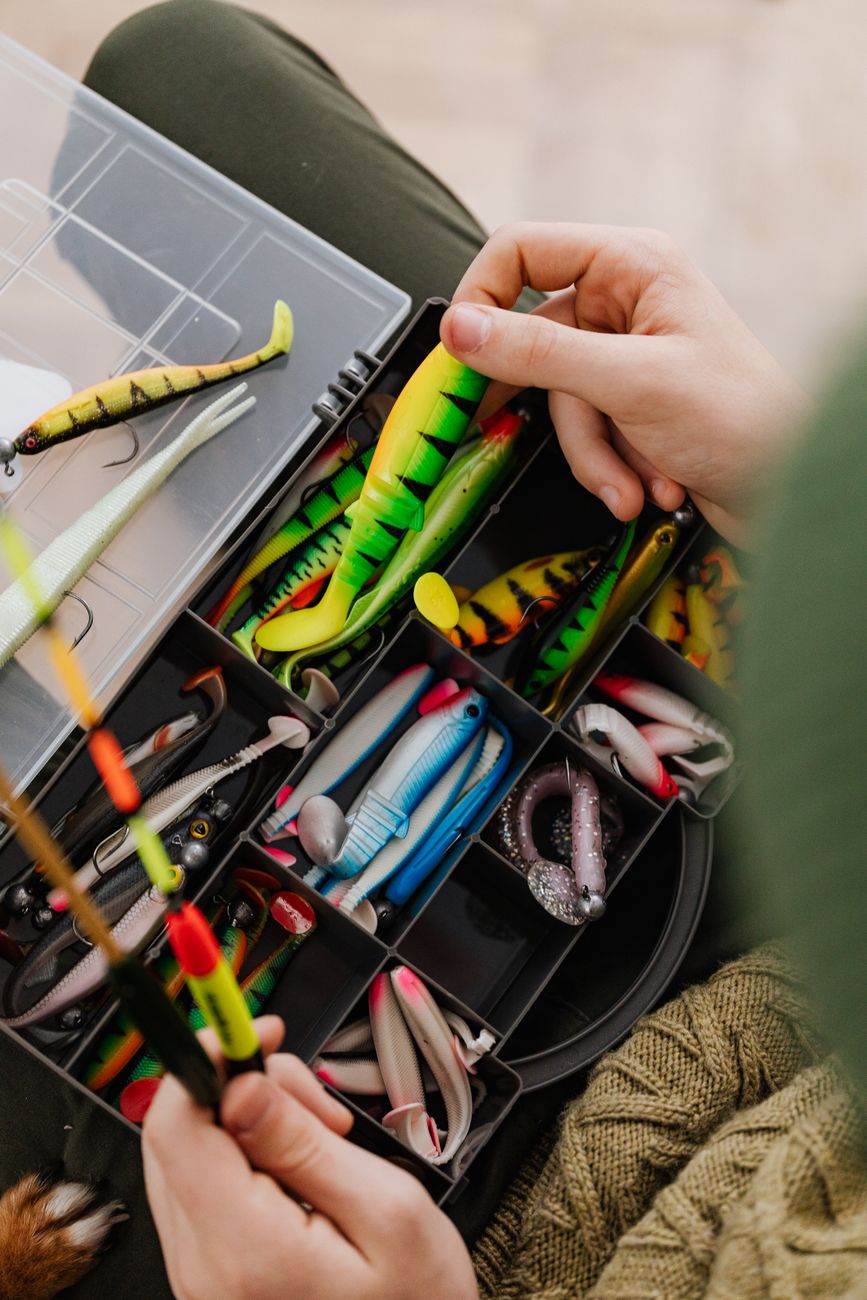
You can gather a surprising amount of information from a few casts if you try different lures quickly. If you have multiple rods, you can rig them up with different lures and baits and test all of them out fairly quickly to determine whether to stay or not.
Fast Retrieve Lures

Topwaters, spoons, twitch baits, bucktails, and plugs quickly identify aggressive fish. If you get a strike early, stay.
Slow Presentation
If your fast lures do not produce, switch to soft plastics, jigs, or live bait. If even slow presentations get nothing, the fish are either not there or not feeding. Leave.
Vertical vs Horizontal
A few vertical drops can tell you if fish are holding deep. A few horizontal retrieves tell you if fish are cruising shallow. Use both to map the water column quickly.
Spot Hopping vs Spot Sitting
The best anglers do both. The trick is knowing when to switch styles.
Spot Hopping
Move often. Cover lots of water. Search for the most active school. This works well for pelagic fish, inshore flats fishing, or any situation where fish are roaming. Get yourself a trolling motor and you can easily travel from one spot to the next until you get a bite.
Spot Sitting
Anchor or stake out. Wait for the fish to come to you during a tide change or feeding window. This works for bridges, drop offs, reefs, docks, and predictable ambush structures.
This is also what you want to do if you do decide to chum up species.
The Most Important Rule
You should leave a spot when your probability of catching fish elsewhere is higher than your probability of catching fish where you currently are.
But this may take a bit of data collection and observation to determine this.
A Simple Decision Framework for Your Next Trip
Here is an easy method you can apply immediately.
- Record the first ten minutes
- Look for bait
- Look for structure
- Make ten strategic casts across different angles or depths
If there is no sign of fish, move.
If there is bait, structure, or a missed strike, stay longer or switch lures before leaving.
If you are at a historically productive spot, allow patience to work in your favor.
If you are exploring, collect the data and move fast.
This approach turns fishing into a series of small tests, which aligns perfectly with your Fishing With Data mindset.
Final Thoughts
Fishing can be pretty easy or down right confusing. Every cast gives you information, every minute shifts the environment, and every spot has potential if you know how to read it. The biggest mistake most anglers make is letting emotion guide their decisions. Hope is not a strategy. Data, observation, and simple time based rules will always outperform instinct alone. Use this to your advantage and learn from every bit of data you can.
Using this structured approach will help you stay longer when it matters, move faster when it does not, and make smarter decisions on every trip.


Leave a Reply